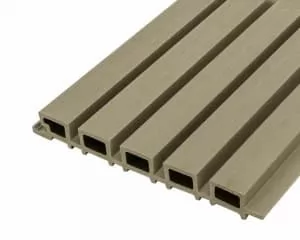
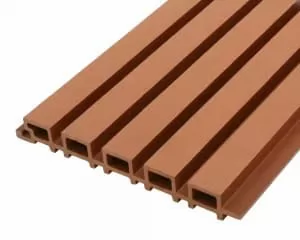
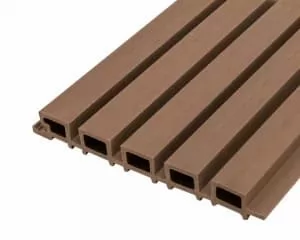
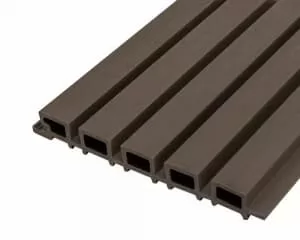
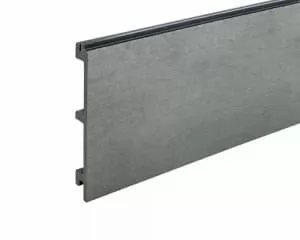
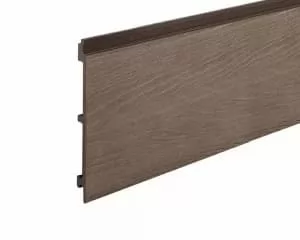
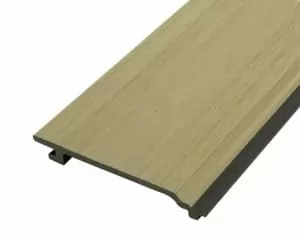
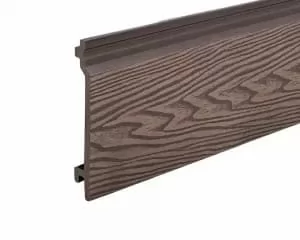
Why Choose Thin Profile WPC Boards?
Thin Profile WPC Boards are engineered to deliver the unbeatable durability and low maintenance of composite materials (explored in top low-maintenance deck materials) in a sleek, slim profile (6-12mm thickness) that opens up new design possibilities for both indoor and outdoor applications. Unlike traditional thick WPC decking boards (14-25mm, covered in solid vs hollow WPC decking), our thin profile boards maintain structural integrity and performance while offering a more compact, lightweight solution ideal for wall cladding (see WPC wall cladding), ceiling panels (explored in WPC wall ceiling), furniture components, and narrow decking applications where space is limited or a minimalist aesthetic is desired.
Manufactured with a high-density polymer-wood fiber composite (composition in What is WPC Timber Decking Made Of?) and optional co-extruded protective cap (same as co-extruded polymer shell WPC), Thin Profile WPC Boards resist warping, rot, and moisture damage while providing the natural wood-like appearance (feature of natural wood grain series WPC) that makes WPC so popular. Available in widths from 90mm to 200mm and custom lengths up to 6 meters (covered in Complete Guide to Composite Decking Lengths), these slim boards are easy to cut, shape, and install—perfect for creative design projects that demand both style and substance. Full OEM/ODM customization is available at factory-direct pricing (from leading WPC manufacturers in China) for color, texture, and profile dimensions.
Ultra-Slim 6-12mm Profile
The slim thickness (30-60% thinner than standard WPC decking) makes these boards ideal for space-restricted applications, lightweight installations (same as lightweight hollow WPC decking), and minimalist design aesthetics without compromising strength (matching co-extrusion high-strength WPC standards).
Dual Indoor/Outdoor Performance
Engineered to perform equally well indoors (wall cladding, furniture) and outdoors (facade panels, narrow decking), with moisture resistance (certified as waterproof co-extrusion WPC) and UV protection (same as fade-resistant capped WPC) for all environmental conditions.
High Flexibility & Workability
Thin profile boards are easier to cut, bend (within design limits), and shape than thick WPC boards, enabling curved installations, intricate patterns, and custom furniture designs (ideal for outdoor furniture like HDPE outdoor leisure chairs).
Consistent Dimensional Stability
Advanced manufacturing processes ensure minimal expansion/contraction (≤2%) even in extreme temperature and humidity changes (addressed in Key Factors Influencing WPC Expansion/Contraction)—critical for thin profile applications where warping would be highly visible.
Thin Profile WPC Boards are the versatile solution for any project that demands the durability of WPC (explored in Complete Guide to WPC Decking) in a compact, slim form factor—from indoor accent walls to outdoor facade cladding (see WPC exterior wall cladding) and space-efficient decking applications.
Indoor Wall Cladding & Accent Walls
Slim profile WPC boards create stylish, low-maintenance accent walls in living rooms, offices, and commercial spaces—adding texture and warmth without taking up valuable space (explored in WPC wall panel interior and Guide to Wood Paneling).
Outdoor Facade & Fence Panels
Thin profile boards are perfect for lightweight exterior cladding and fence panels (see WPC fence and eco slat WPC cladding), providing weather resistance and aesthetic appeal with reduced material weight and cost.
Narrow Decking & Step Treads
Ideal for narrow decking areas, step treads, and balcony edges (perfect for balcony WPC decking) where standard thick WPC boards would be too bulky—maintaining safety and performance in compact spaces (covered in Decking Balustrade Height Tips).
Ceiling Panels & Pergola Slats
Lightweight slim profile boards work perfectly for ceiling panels (see WPC wall ceiling) and pergola slats (made with co-extrusion pergola beam compatibility)—providing UV protection and visual appeal with minimal structural load.
Retail & Commercial Display Fixtures
Retail stores and commercial spaces use thin profile WPC boards for durable, low-maintenance display shelves, wall panels, and checkout counters with a premium wood finish (feature of wood grain effect composite decking).
Boat & Marine Interior/Exterior Trim
Water-resistant thin profile WPC boards are ideal for marine applications—boat interiors, swim platforms, and dock trim—offering corrosion resistance and low maintenance (certified as waterproof WPC decking).
Frequently Asked Questions about Thin Profile WPC Boards
Comprehensive Guide to Thin Profile WPC Boards
Introduction to Thin Profile WPC Boards
Thin Profile WPC Boards are the versatile evolution of traditional WPC composite materials (explored in Ultimate Guide to WPC Decking), designed to deliver the same durability and low maintenance in a sleek, slim form factor (6-12mm thickness). These boards expand the application possibilities of WPC beyond standard decking (see outdoor WPC decking) to include wall cladding, ceiling panels, furniture, and narrow outdoor flooring—all while maintaining the environmental benefits and performance characteristics that make composite materials so popular. This guide explores the design, applications, installation, and maintenance of thin profile WPC boards for both residential and commercial projects.
Composition of Thin Profile WPC Boards
Thin Profile WPC Boards use the same high-quality composite core as standard WPC products—a blend of recycled wood flour (50-60%) and HDPE polymer (35-45%) with additives for UV protection, moisture resistance, and processability (composition in What is WPC Timber Decking Made Of?). The key difference is the manufacturing process: thin profile boards are extruded with tighter dimensional tolerances and (for outdoor grades) a thinner but equally effective co-extruded cap layer (0.3-0.5mm) that provides surface protection without adding significant thickness (same as 360 fully capped co-extrusion). The material density is maintained at ≥0.9g/cm³ to ensure structural integrity in the slim profile.
-
High-Density WPC Core: Recycled wood flour and HDPE polymer blend with high density (≥0.9g/cm³) to maintain strength in thin profiles (matching co-extrusion high-strength WPC standards).
-
Co-Extruded Cap Layer (Optional): Thin (0.3-0.5mm) ASA/HDPE cap for outdoor-grade boards, providing UV and scratch resistance (feature of co-extrusion anti-scratch WPC) without increasing overall thickness.
-
Precision Extrusion Profile: Tighter dimensional tolerances (±0.1mm) critical for thin profile applications where even minor variations are visually noticeable (supplied by best WPC decking manufacturer in the world).
-
Reinforced Edge Design: Slightly thicker edge profiles (where needed) to prevent chipping and improve handling for thin boards during installation (installation tips in How to Install Deck Tiles).
Key Benefits of Thin Profile WPC Boards
1. Expanded Design Versatility
The slim profile opens up WPC to applications where thick boards would be impractical—including curved wall cladding (see WPC wall panel interior), ceiling panels (see WPC wall ceiling), furniture components, and narrow decking—unlocking creative design possibilities not available with standard WPC products (explored in Guide to WPC Decking for Outdoor Spaces).
2. Reduced Material & Installation Costs
Thin profile boards use less raw material per square meter (30-60% less than standard WPC), reducing material costs (explored in WPC Decking Cost Per Square Foot) while maintaining coverage area. Their lightweight nature (same as lightweight hollow WPC boards) also cuts transportation and installation labor costs significantly.
3. Minimal Structural Load
Ideal for installations where weight is a concern—including upper-level cladding, ceiling panels, and lightweight structures—thin profile boards deliver aesthetic appeal without adding excessive load to building structures (perfect for patio WPC decking and garden WPC decking).
4. Enhanced Workability
Thin boards are easier to cut, drill, sand, and shape than thick WPC boards, reducing installation time and allowing for intricate custom designs that would be difficult or impossible with standard composite boards (installation tips in How to Install Deck Tiles).
5. Consistent Indoor/Outdoor Performance
Engineered to perform in both indoor (low moisture, low UV) and outdoor (high moisture, high UV) environments (certified as waterproof co-extrusion WPC), thin profile boards eliminate the need for separate materials for interior and exterior design elements—simplifying project procurement and installation.
6. Sustainable Material Choice
Using less material per square meter reduces environmental impact while maintaining the recycled content (up to 90%) of standard WPC products—aligning with green building standards and sustainability goals (explored in Best Materials to Replace Traditional Decking).
Installation Considerations
1. Substrate Preparation
Thin profile boards require a flat, stable substrate (±1mm over 1 meter) to avoid warping and ensure proper installation—critical for cladding applications (see WPC wall cladding) where uneven surfaces will be highly visible with slim boards.
2. Fastening Spacing
For thin profile boards (6-10mm), reduce fastener spacing to 200-300mm (vs 400mm for thick WPC) to prevent board movement and ensure secure attachment. Use self-drilling stainless steel screws appropriate for thin material to avoid splitting (installation tips in Ultimate Guide to Installing Deck Balustrades).
3. Expansion Gap Allowances
While thin boards have lower overall expansion/contraction (addressed in Key Factors Influencing WPC Expansion/Contraction), maintain 3-5mm expansion gaps between boards and 8-10mm at fixed structures to accommodate thermal movement—especially important for outdoor installations (see poolside WPC decking) exposed to temperature fluctuations.
4. Curved Installation Techniques
For curved installations, pre-heat boards to 60-70°C (using a heat gun or infrared heater) to increase flexibility, and use flexible fasteners/clips (same as interlocking WPC deck tiles) to maintain the curved shape while allowing for thermal movement.
Maintenance Tips
-
Routine Cleaning: For indoor applications, dust regularly and wipe with a damp cloth as needed. For outdoor applications, wash periodically with mild soap and water to remove dirt and grime—avoid high-pressure washing which can damage thin surfaces (maintenance tips in Ultimate Guide to WPC Decking).
-
Edge Protection: Apply clear silicone sealant to cut edges (especially for outdoor installations) to prevent moisture ingress (critical for waterproof WPC decking) and maintain the board's structural integrity over time.
-
Avoid Abrasive Cleaners: Use only non-abrasive cleaning products on capped thin profile boards (same as capped polymer shield WPC) to prevent scratching the thin cap layer, which is critical for UV protection in outdoor applications (feature of fade-resistant capped WPC).
-
Inspect Fastenings: Check fastenings annually for tightness, especially in high-wind or high-moisture environments, to prevent board movement and potential damage to thin profiles (maintenance tips in top low-maintenance deck materials).
Why Choose Thin Profile WPC Boards?
Thin Profile WPC Boards represent the next frontier in composite material design—delivering all the durability, low maintenance, and aesthetic benefits of standard WPC (explored in Ten Advantages of WPC Decking) in a slim, versatile form factor that expands application possibilities dramatically. For designers, architects, and homeowners seeking to incorporate the performance of WPC into creative indoor and outdoor projects that demand a minimalist aesthetic or space efficiency, thin profile boards are the ideal solution. They combine material efficiency, design flexibility, and long-term performance in a product that meets the demands of modern construction and design (supplied by leading WPC manufacturers in China).
In conclusion, Thin Profile WPC Boards are a versatile, cost-effective (explored in WPC Decking Cost Per Square Foot), and sustainable alternative to both thick WPC boards (see solid vs hollow WPC decking) and traditional materials (wood, PVC, aluminum) for a wide range of indoor and outdoor applications. Their slim profile, combined with the inherent durability of composite materials (explored in Complete Guide to WPC Decking), makes them the perfect choice for wall cladding, ceiling panels, furniture, narrow decking, and facade systems—delivering style, performance, and low maintenance in a compact, easy-to-install package.